The reconciliation workflow

From many documents to accounts ready for review in a single upload.

Navor separates long uploads into the documents they contain, extracts the accounting data, links each document to the correct transaction, and keeps the supporting evidence beside the accounting entry.

01 · Prepare the evidence

One file can contain many accounting documents.

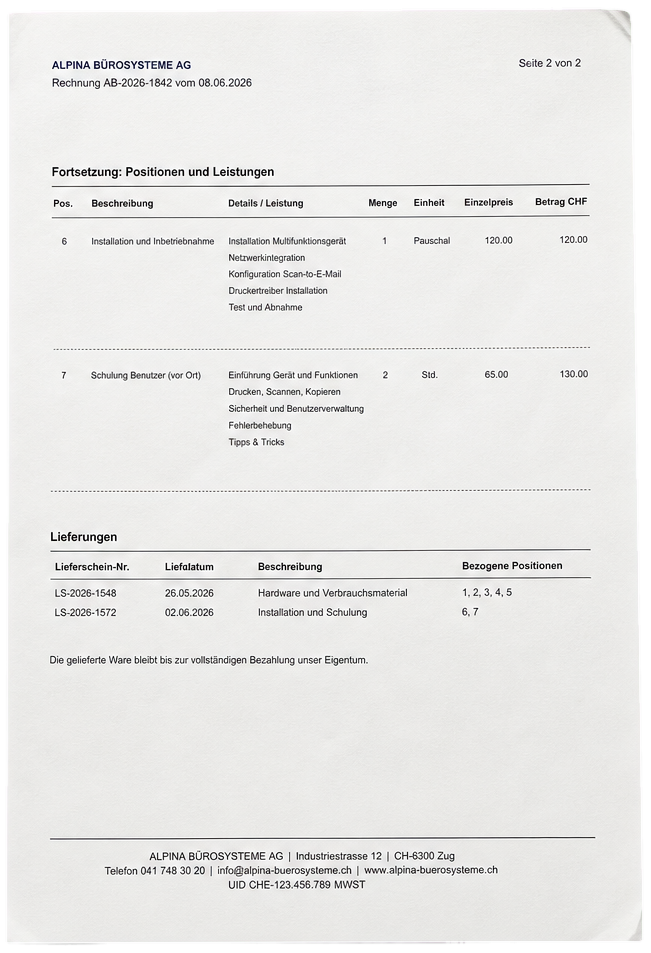
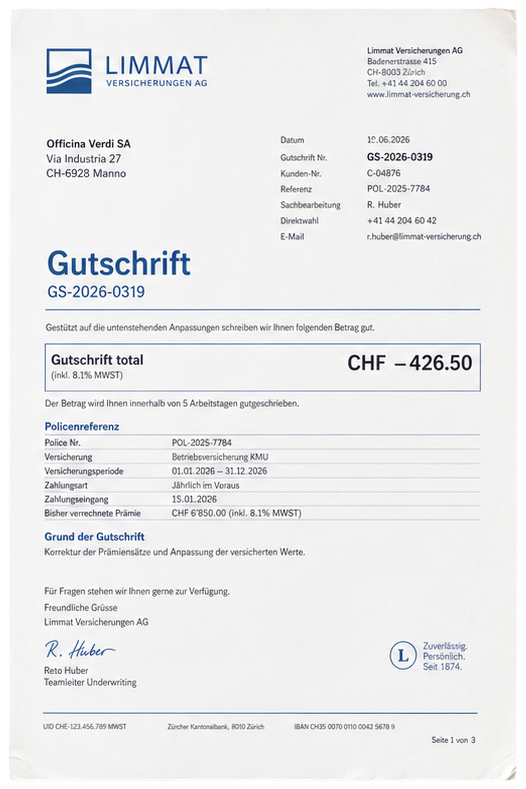
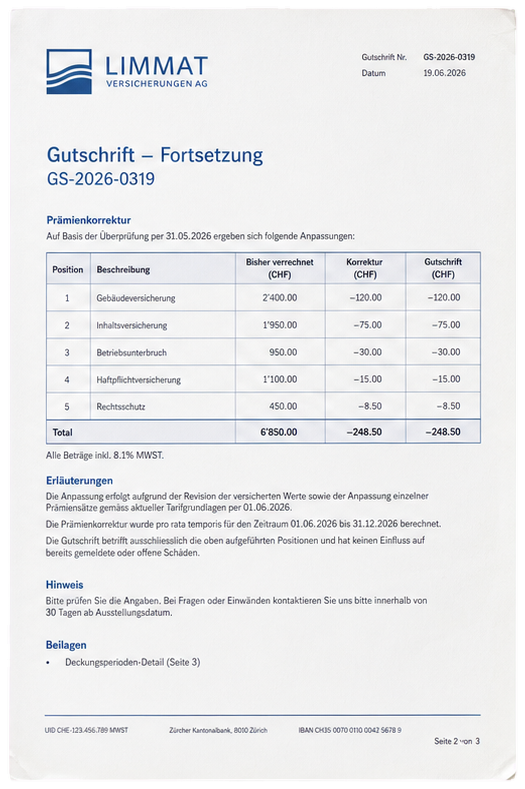
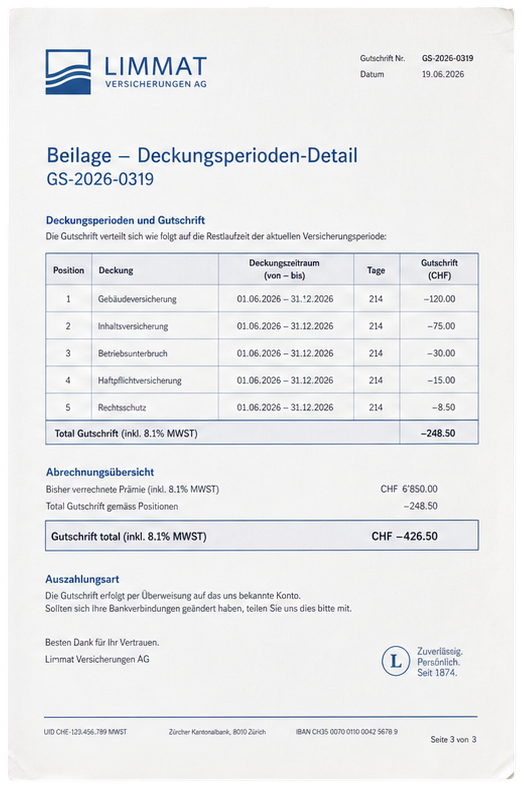
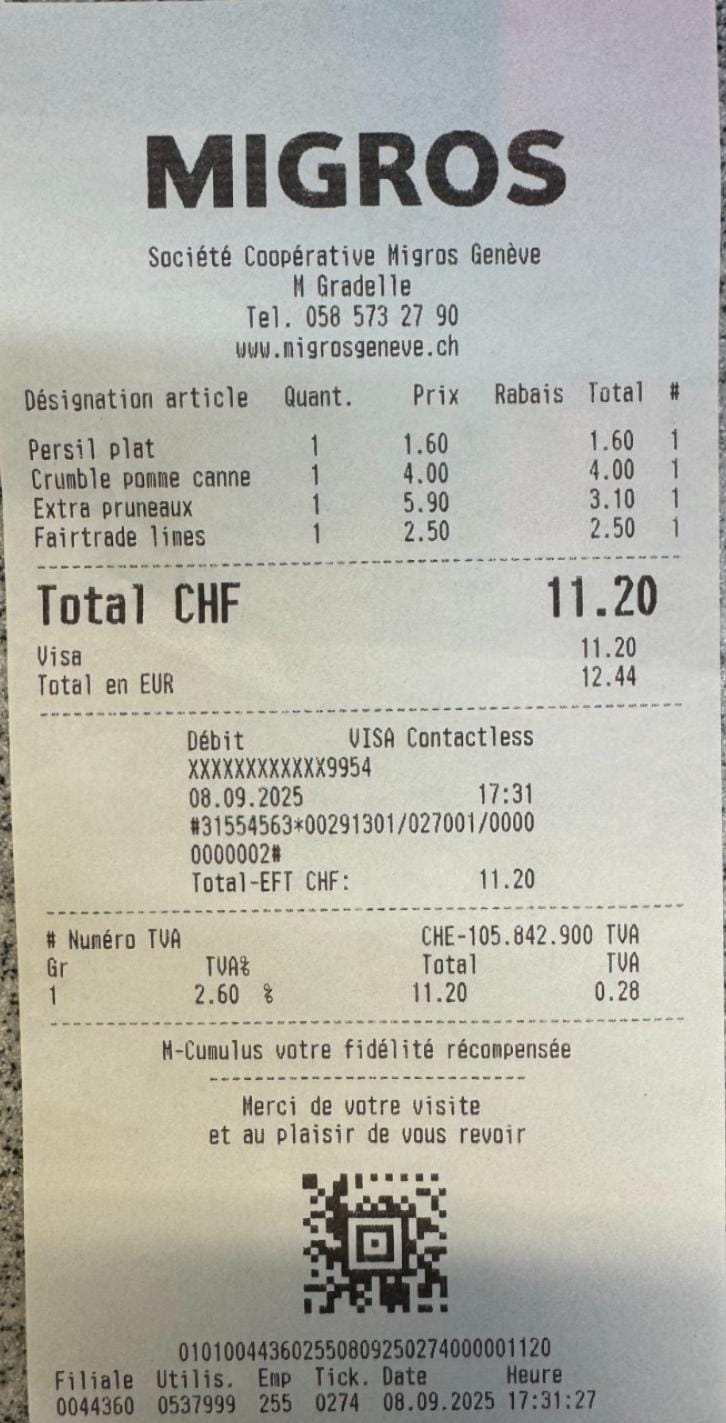
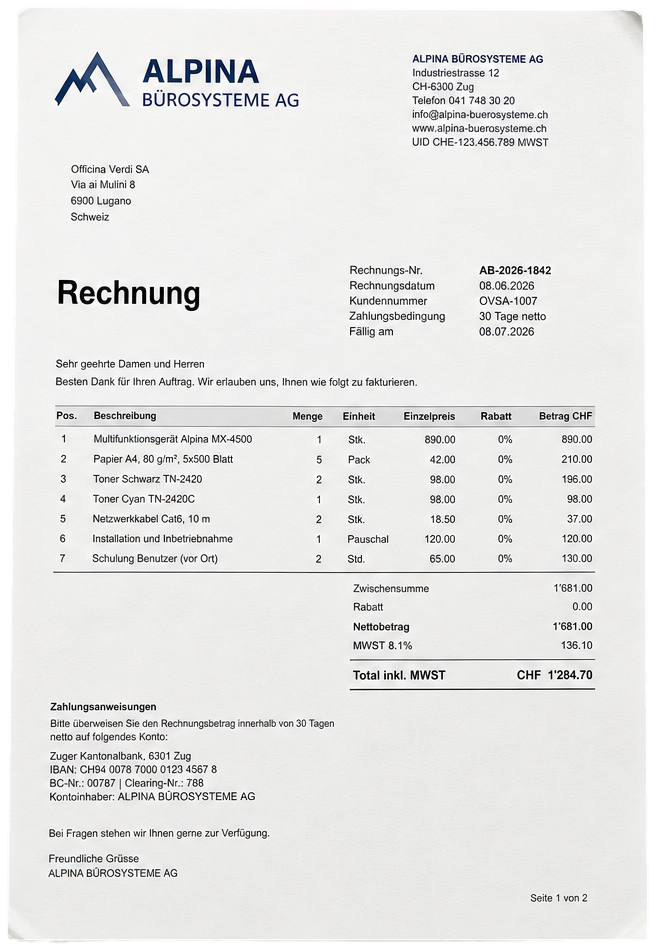
A scanned PDF can run to dozens of pages and contain invoices, receipts, credit notes, payment slips, and unrelated attachments. Navor reads each page in context and creates coherent document segments before extraction begins.

A one-page receipt remains one document.
A two-page invoice stays together.
A credit note and its continuation pages form their own segment.

02 · Read what matters

Each segment becomes structured accounting evidence.

Navor identifies the document type and extracts all required fields, including supplier, dates, total, currency, and VAT. The original document remains available while the extracted details become searchable and usable in accounting.
Document processing stops when essential information is missing, such as the date, amount, or other required data. Missing or uncertain information remains visible for verification.

03 · Connect evidence to money

The document and the bank transaction meet in the same workflow.

Navor first narrows the usual candidates by amount, currency, and a practical date window. If several transactions remain plausible, it compares names, invoice numbers, payment references, descriptions, and date proximity.

01

Exact same-currency matches

Exact amounts are grouped by currency. When the match is unambiguous, Navor reconciles the document. If several payments share the same amount, Navor’s AI reviews the ambiguous documents and transactions in full and identifies the most appropriate reconciliation.

02

Grouped bank payments

A bank payment can contain several detail rows. Navor links the document to the relevant detail instead of attaching it to the entire group.

03

Foreign currencies and combined payments

A dedicated flow uses official historical exchange rates from the Swiss Federal Office for Customs and Border Security, the context of payment deadlines, and a limited tolerance on amounts. It can assess several documents and transactions together when the payment structure requires it.

04

No forced reconciliation

If the evidence is insufficient, the document keeps its Open status. The uncertainty remains visible, and the case is ready for another review.

04 · Keep the proof attached

Open the entry and see the source document beside it.

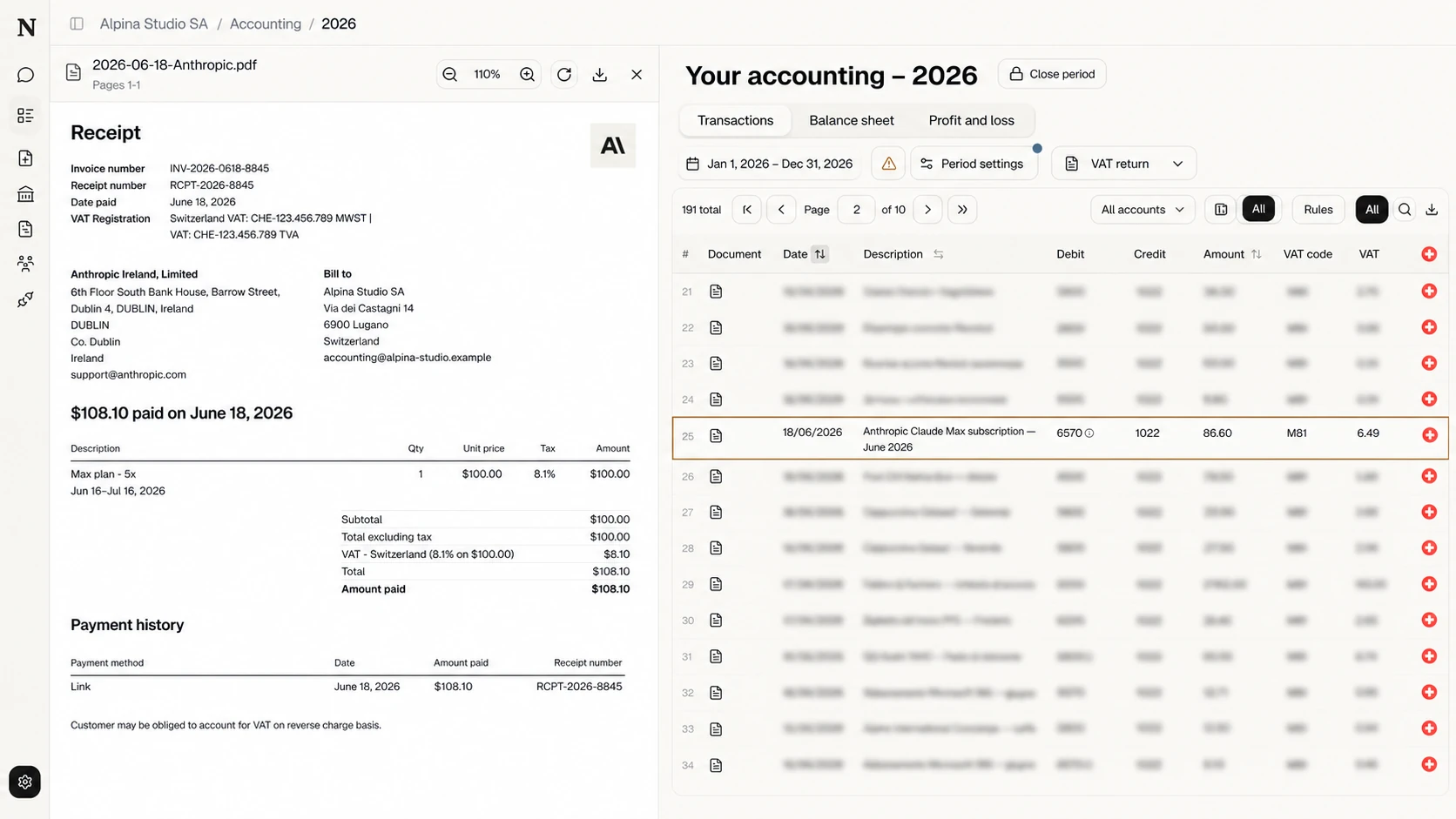
The accounting table keeps the supporting document linked to the transaction. A reviewer can open the original in a side panel, inspect the extracted details, and return to the same row without reconstructing the trail through folders and emails.

Swiss guidance generally requires accounting books and supporting records to be retained for ten years from the end of the financial year. Electronic retention must also ensure integrity, readability, and access. Navor keeps the source together with its accounting relationship. Each company remains responsible for its own retention policy and legal obligations.
Swiss Confederation guidance on electronic bookkeeping
A reconciled accounting row remains visible while its original document opens in a side panel.

05 · Automate what repeats

Need to create booking rules? It is faster in chat.

Some recurring transactions always contain the same keyword, phrase, or sequence of words in their description. In these cases, a booking rule can be useful. When Navor detects a transaction that matches the rule, it already knows how to classify it, which account to use, and which VAT code to apply. Booking these recurring transactions then becomes automatic.

Navor recommends creating these rules with the Navor AI agent, especially when there are many patterns to manage. Describe several patterns in natural language, preview them, and approve the prepared rules without leaving the conversation.

Ask Navor
Accounting investigation

06 · Investigate the exceptions

Accounting always has exceptions.

The automated workflow handles repeatable work, while the Navor AI agent handles more complex investigations. It can examine open documents, bank transactions, grouped details, and previous accounting context. It can then explain why a plausible match was missed or why an inconsistency arose.

Below are some of the exceptions Navor helps investigate and manage.

Ask Navor
Accounting investigation
01Timing exception

Payment after 72 days

The amount and supplier match, but the payment falls outside the automatic time window. In this case, the AI agent can widen the search and verify whether the transaction is in fact a late payment.

02Amount exception

Currency difference or unusual fee

Historical rates and ordinary tolerance are not enough when a processor charges an unusual fee. The agent compares the document, bank text, and nearby movements to reconstruct the most plausible explanation from all available data.

03Business context

A tip added after the receipt

The card charge can exceed the restaurant receipt total because of a tip. The agent presents the most likely document-to-transaction pair and leaves the final judgment to the accountant when the choice is not clear.

04Grouped payment

Several documents in a single payment

One transaction may settle several invoices or include multiple beneficiaries. The investigation distinguishes the overall payment context from the individual details and looks for a complete explanation.

Questions

What the workflow does, and where review still matters.

Can Navor process a PDF containing many different documents?+

Yes. Navor evaluates the evidence on each page and the continuity between pages, then creates coherent segments. Long files are processed in bounded units rather than as one undifferentiated block.

How does ordinary document matching work?+

It starts with candidates that have the exact amount and currency within a practical date window. If several possibilities remain, Navor compares counterparties, descriptions, references, and date proximity. Uncertain cases remain open.

Does Navor handle foreign currencies and grouped payments?+

Yes. The cross-currency flow uses official historical exchange rates from the Swiss Federal Office for Customs and Border Security, the context of payment deadlines, and a limited tolerance on amounts. Grouped bank details are treated as candidates in their own right and can be linked to the correct document.

Can booking rules be created through chat?+

Yes. The Navor AI agent prepares rules for the relevant financial year from natural-language instructions, shows previews, and waits for approval.

Does Navor guarantee legal archiving compliance?+

Navor keeps source documents linked to their accounting context. Swiss law requires, among other things, ten years of retention, integrity, readability, and access. Each company must still ensure that its retention procedures meet the legal obligations that apply to it.

Bring one real month. Review the matches and the exceptions.

Start with the documents and bank transactions you already have. Navor prepares the trail and leaves professional judgment where it belongs.

Document reconciliation for accounting review | Navor